Jollof, Memory and a Winnipeg Culinary Crown
Five versions of jollof brought different countries and culinary traditions into competition. Around one Winnipeg table, strangers discovered that choosing the “best” plate also meant confronting the memories and loyalties they brought with them.
By the time dishes four and five reached our table, alliances had begun to form.
We did not know which chef or country stood behind each number. We had only the rice in front of us and our own ideas about what good jollof should taste like. Around the table, people compared texture, richness and heat while trying to place each dish somewhere on the map of West Africa.
Four and five quickly emerged as our favourites. Both were soft, fluffy and tender, with a rich savoury character and a restrained hint of heat—at least to my palate, which may be more accustomed to spice than some. When the identities were revealed, dish four represented Ghana. Dish five came from Sierra Leone.
We had arrived at the table as strangers. Once the tasting began, we became something closer to a temporary family debating dinner.
The conversation between the plates
The people seated around me came from a mix of countries and backgrounds. A grandmother at our table, warm and animated, talked with us through much of the event. With every numbered sample came another round of guesses, reactions and comparisons.
The discussion did not stay at the level of scoring. We talked about what the food made us feel and how its flavours connected to different parts of Africa. Each person seemed to carry a slightly different measure of what tasted right.
That was the larger tension inside the Culinary Crown Cooking Competition’s Jollof War. Five local chefs represented Ghana, Nigeria, Sierra Leone, Liberia and Senegal, each preparing a regional interpretation of the tomato-based rice dish. Differences in rice, stew, spice, smokiness and acidity gave the judges plenty to consider. For the crowd, however, preference was also personal.
How do you judge a memory?

Organizer Chef Alex Bockarie used his address to explain the table he hoped to create. The competition was intended to bring people together through culture, cooking and a shared love of jollof. He also recognized that everyone arrives with a different idea of what “best” means.
Those opinions are rarely based on flavour alone. They are shaped by the jollof people remember from home: the version made for family gatherings, celebrations and important occasions. The competition brought those memories into the same room, not necessarily to end the debate, but to celebrate why it continues.
Winnipeg chef and experienced culinary competitor Eejay Chua offered another way of understanding the judging. In our conversation, he described evaluating the complete submission—from flavour, texture and plating to the emotion a dish creates. That last consideration mattered. Emotion may be difficult to place on a scorecard, but it was everywhere in the room.
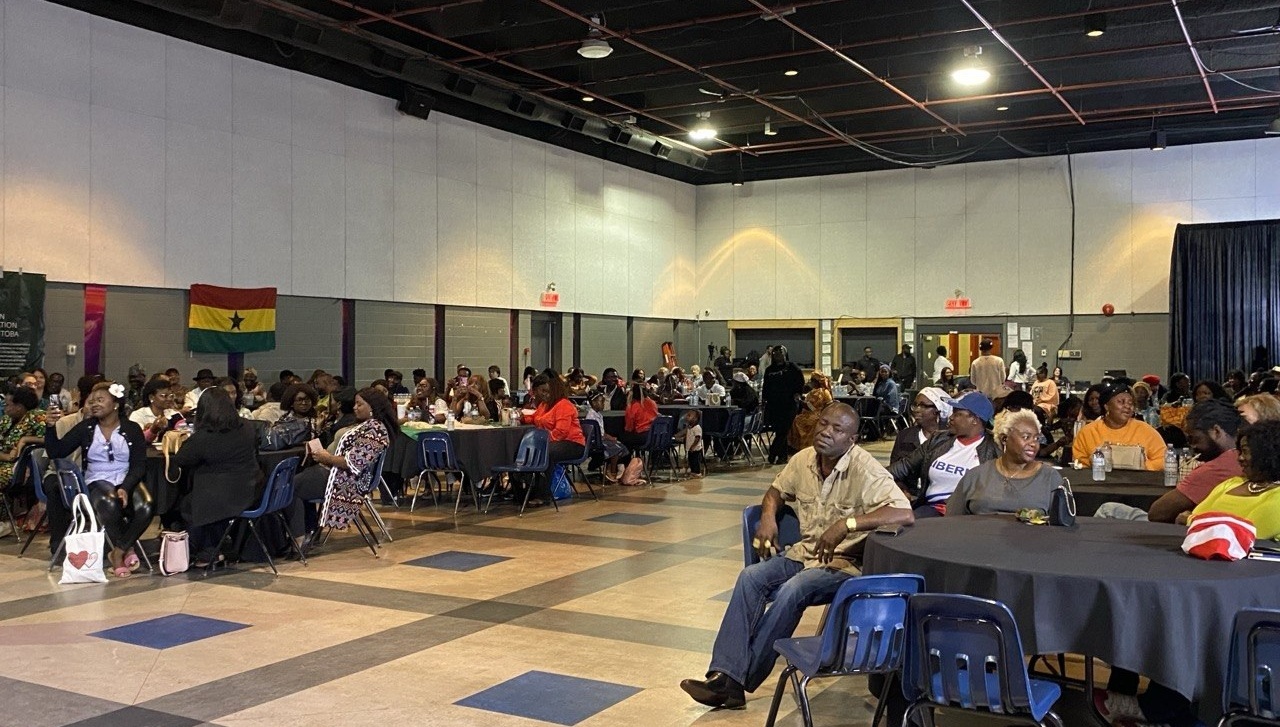
A room ready to cheer at Winnipeg’s jollof competition
The DJ kept the room moving, and every national introduction brought another wave of noise. People cheered for their countries, their chefs and the plates they hoped would win. The rivalry was playful, but the pride behind it was real.
Then Margaret Konteh’s name was announced.

The chef representing Sierra Leone had won first place. She did not simply smile and accept the trophy. She jumped up and down, her excitement immediate and unrestrained, as the room erupted around her. In the footage from the stage, she raises the tall gold trophy while the other competitors and organizers look on. It was the clearest image of the evening: a winner caught in a moment of pure joy while her community celebrated with her.

Abigail Obuobi, representing Ghana, received the Chef’s Kiss Award. Ghana and Sierra Leone had also produced the two dishes most of our table preferred, but the official results did not settle the larger argument over who makes the best jollof. They were unlikely to.
What remained at the table
The more meaningful result was what happened while we tried to choose.
People who had not known one another began exchanging impressions, debating flavours and sharing what the food brought back to them. Around us, the room cheered for countries, chefs and plates. At our table, those lines became a little less important.
Bockarie set out to bring people to a cultural table through competition and a shared love of jollof. By the time Konteh began jumping in celebration, that table had become large enough to hold five countries, several definitions of authenticity and a room full of people who did not need to agree on the best jollof to understand why it mattered.


Leave a Reply